AI 图片提示词画廊

真实作品,真实提示词。打开任意案例,查看生成图片所用的提示词、模型,以及图片如何一步步完善。

这里的提示词来自已经公开的 DREAMMMER 对话,而不是编造的示例说明。每张卡片都把成品图片或视频与其真实生成记录中的提示词、模型放在一起。打开案例可以查看更完整的创作过程,再把适合的部分改成自己的需求。
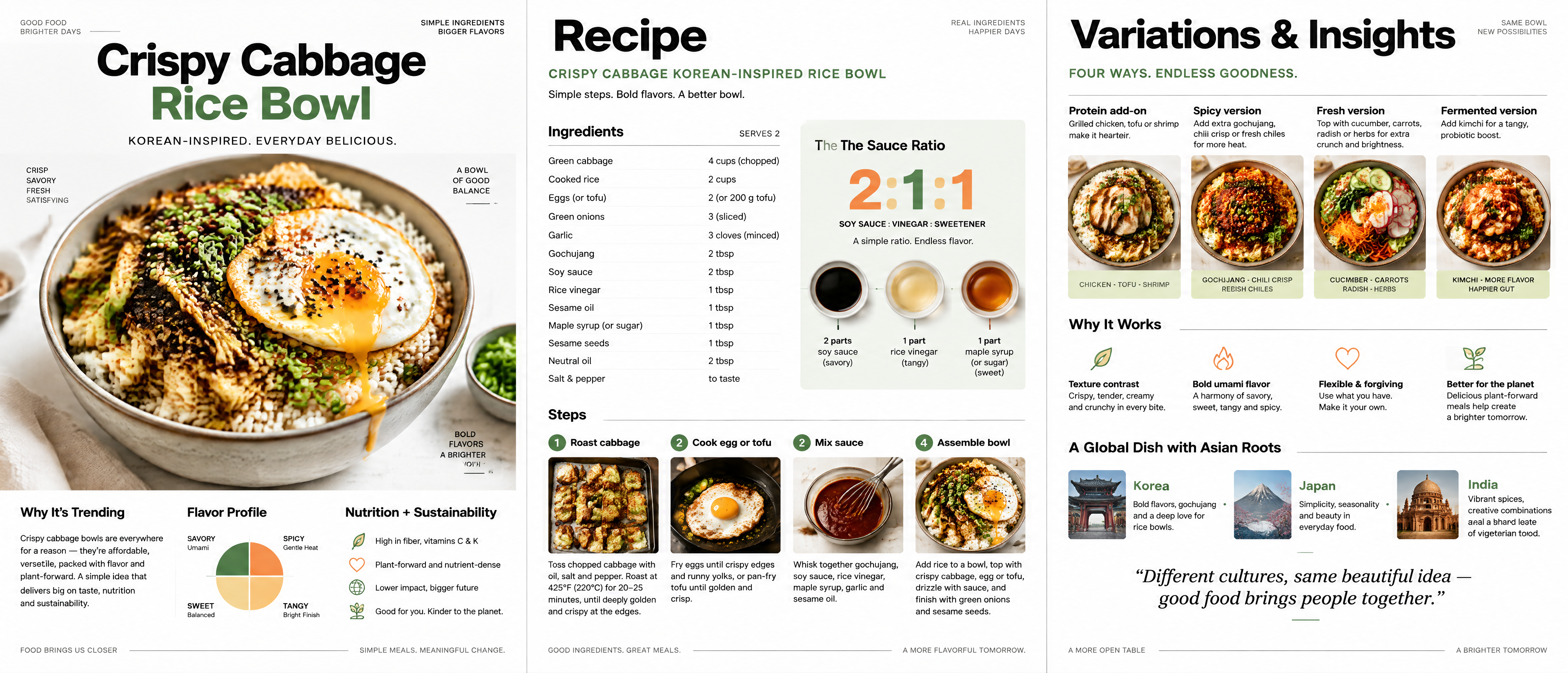
Create a high-resolution, sleek modern 3-page editorial food magazine spread presented as three equa查看创作过程

Create a high-resolution, sleek modern 3-page editorial food magazine spread presented as three equal vertical panels side-by-side in one wide horizontal composition. Theme: “Crispy Cabbage Korean-Inspired Rice Bowl.” Premium minimalist food magazine art direction, bright white background, generous negative space, strict Swiss-inspired grid, bold clean sans-serif typography, subtle accents in leafy green, warm orange, and black, soft restrained shadows, sharp photorealistic food photography mixed with elegant geometric diagrams and refined infographics. No scrapbook styling, no clutter. LEFT PANEL — PAGE 1: Large hero photograph of a beautiful ceramic rice bowl filled with fluffy rice, deeply caramelized crispy roasted cabbage, scallions, sesame, and a glossy fried egg with a golden runny yolk. Editorial title clearly readable: “Crispy Cabbage Rice Bowl”. Add a concise subtitle. Include clean text sections titled “Why It’s Trending”, “Flavor Profile”, and “Nutrition + Sustainability”; use short tasteful placeholder editorial copy, a minimal circular/quadrant flavor diagram, and tiny elegant sustainability/nutrition icons. CENTER PANEL — PAGE 2: Clearly readable title “Recipe”. Structured ingredient list in a neat column. Include four small numbered step images and labels: “1 Roast cabbage”, “2 Cook egg or tofu”, “3 Mix sauce”, “4 Assemble bowl”. Add thin rules, arrows, precise spacing, and a clean sauce-ratio infographic prominently reading “2:1:1”. RIGHT PANEL — PAGE 3: Clearly readable title “Variations & Insights”. Four orderly variation cards with miniature food photos and labels: “Protein add-on”, “Spicy version”, “Fresh version”, “Fermented version”. Include a concise “Why It Works” section with minimal line icons and short explanations. Add a refined cultural influence row labeled “Korea · Japan · India”. Finish with an elegant italic quote at the bottom. Keep all typography aligned, polished, legible, and magazine-authentic. Ensure the three panels feel like one cohesive professional editorial spread, with balanced image-to-text hierarchy and impeccable spacing.

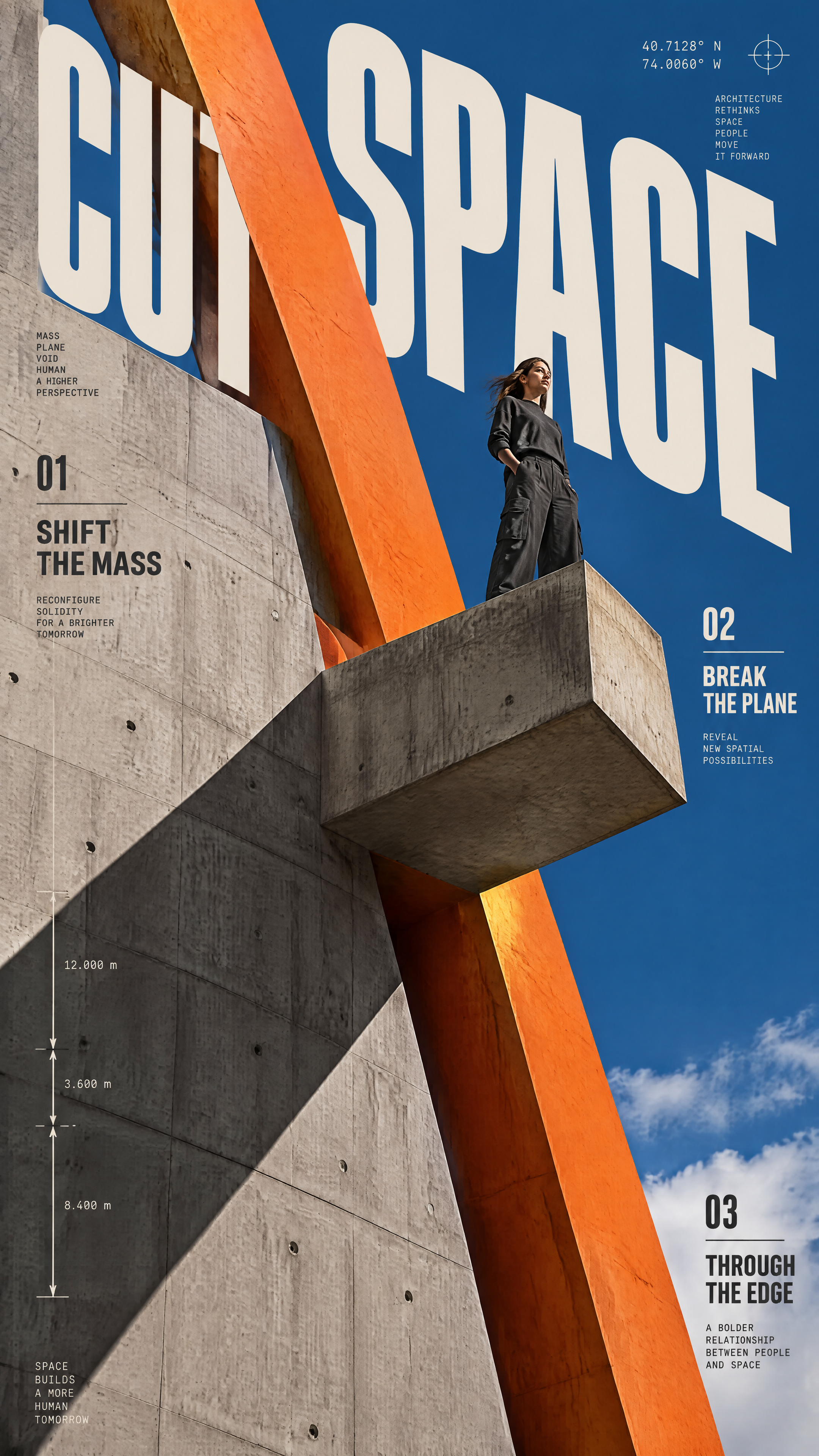
Create a premium vertical 9:16 editorial poster in English titled “CUT SPACE”. Show a monumental bru查看创作过程

Create a premium vertical 9:16 editorial poster in English titled “CUT SPACE”. Show a monumental brutalist raw warm-gray concrete wall with a projecting platform, viewed from a dramatic low angle with powerful architectural perspective. Place a realistic young woman standing naturally near the outer edge of the platform, believable anatomy, skin texture, clothing folds, and charcoal clothing. Insert a thick diagonal safety-orange spatial slice cutting violently through the concrete architecture and through the typographic space, with dimensional thickness, sharp edges, and strong cast shadows. Use a deep cobalt-blue sky. Place the main title “CUT SPACE” in giant tall condensed warm-ivory letters across the sky, integrated into the perspective and partially interrupted or occluded by the orange slice. Add clearly legible secondary editorial text: “SHIFT THE MASS”, “BREAK THE PLANE”, and “THROUGH THE EDGE”, plus small architectural annotations, coordinates, measurement marks, and numbered details. Bold, structural, aggressive, sophisticated Swiss/brutalist graphic design; realistic architectural photography fused with precise 3D spatial graphics; strong negative space, hard sunlight, crisp shadows, subtle concrete grain, print-ready finish. Palette limited to warm-gray concrete, deep cobalt blue, warm ivory, charcoal, and safety orange. No extra people, no logos, no watermark, no clutter. Ensure all requested text is spelled correctly and legible.

查看创作过程

A single continuous 5-second vertical shot in the style of a traditional high-end 3D animated feature, blending anime stylization with believable realism. A young girl in a traditional East Asian-inspired outfit with twin hanging buns and wide sleeves stands against a clean pure-black background, framed in a medium shot with her entire upper-body movement visible. Use extreme cartoon squash-and-stretch and smooth keyframe animation. Include a short Japanese startled cry, such as “えっ、なに!?” with perfectly synchronized mouth movement; vocal delivery is sudden, loud, and astonished, with expressive timing matching the action. 0–2 seconds: She looks at something off-screen and suddenly reacts in shock, quickly stepping half a step backward. Her shoulders jerk upward, both hands fly to chest height with fingers spread wide, and her head tilts back. Her twin buns and wide sleeves swing with dynamic cloth and hair motion, leaving clear stylized motion trails. Her mouth opens slightly in surprise. 2–4 seconds: Escalate into an extreme cartoon explosion of surprise. Her eyes comically enlarge beyond normal proportions and stretch outward from her face, her eyebrows shoot upward and separate from the brow ridge, and her mouth opens into a huge O-shape while her cheeks tighten. A giant red exclamation mark bursts above her head, surrounded by fast impact lines, comic vibration marks, and energetic visual effects. The camera rapidly pushes in toward her face while she shouts, maintaining an intense exaggerated-surprise expression. 4–5 seconds: The exaggerated effects quickly dissolve. Her oversized eyes contract smoothly back to normal, her body settles, she blinks and rubs one eye with her hand. She lowers her head slightly, furrows her brows, and shifts into a skeptical, mildly exasperated expression before returning to normal conversation. The camera slowly pulls back to the original medium framing. Strong readable poses, powerful timing, smooth transitions, high-resolution detail, cinematic lighting on the character against the black background, polished cloth dynamics and hair motion, no cuts, no subtitles, no on-screen text except the red comic exclamation mark.

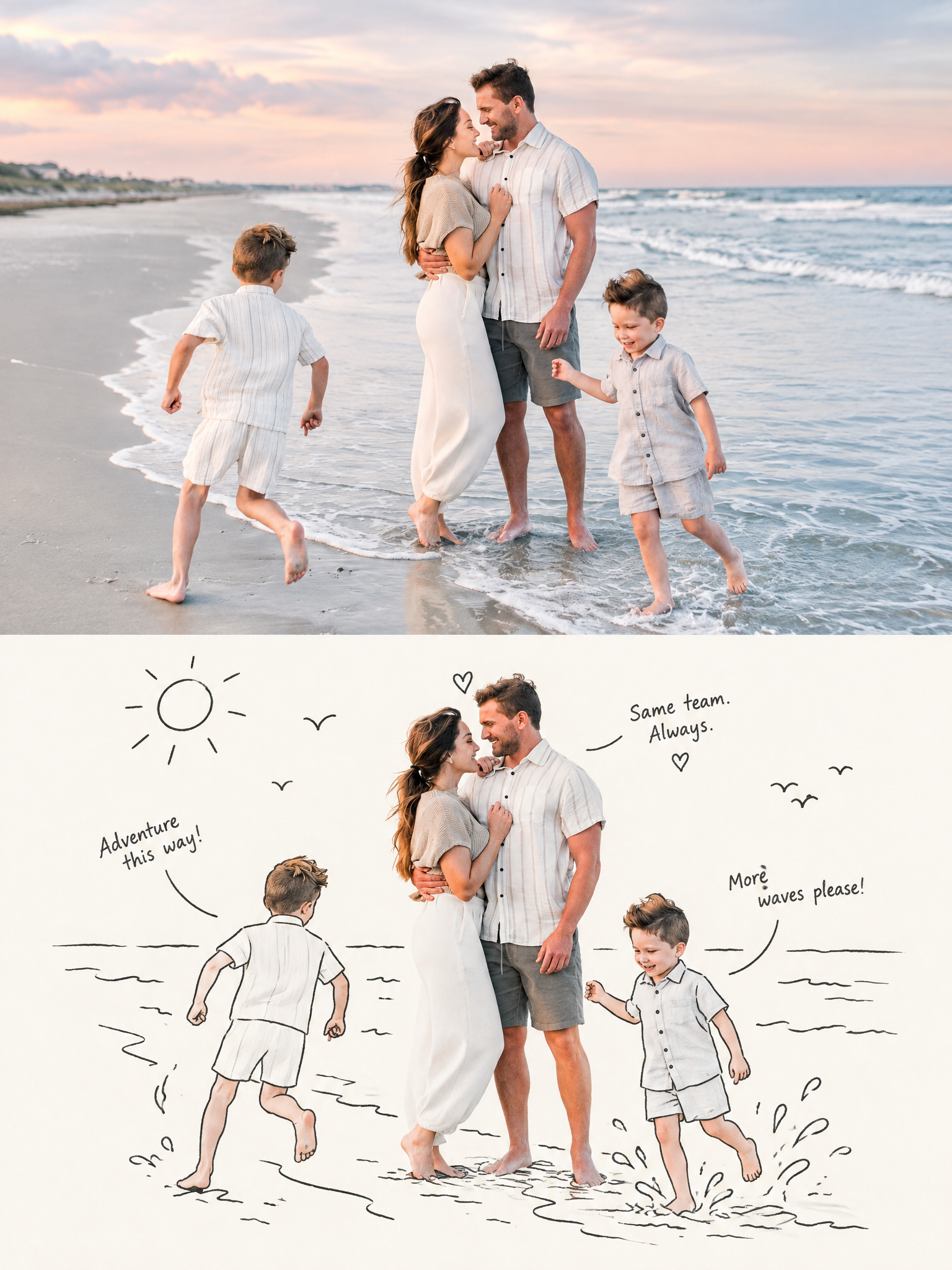
Create one standalone premium editorial poster from the supplied photograph, vertical 3:4. Do not cr查看创作过程

Create one standalone premium editorial poster from the supplied photograph, vertical 3:4. Do not create a collage of multiple photos. Divide the canvas into two equal-height sections with a precise horizontal 50/50 split. UPPER HALF: preserve the original photograph's main subject, composition, recognizable structure, realistic material texture, natural light and shadow, and original color atmosphere. Apply restrained high-end photographic color grading inspired by lifestyle magazines, independent publications, and fine-art photography. If needed, naturally extend the surrounding environment to fit the vertical format, but never stretch, distort, or alter the main subject. Make the upper half feel like a beautifully printed photographic plate. LOWER HALF: understand the photograph's true visual core, memorable emotion, action, relationship, contrast, spatial rhythm, and narrative—not merely the most obvious object. Reimagine that core as an editorial illustration built around the real subject and several simple black-line doodle figures. Keep the most meaningful real subject or visual anchor, with its identity, material qualities, and key proportions recognizable. Do not mechanically crop the largest object. Preserve essential relationships and poses while simplifying irrelevant details. Use several thin black or dark-gray line doodle figures whose gestures and interactions naturally respond to, amplify, or playfully subvert the original scene. Use a clean off-white or very pale background with generous negative space. Pull the lower-half palette from the most distinctive vivid colors in the upper photograph, purifying and brightening them; the realistic subject carries the color while doodles and text use delicate black/dark-gray lines. The overall design is bright, restrained, intelligent, and premium. Add a few ultra-short, witty, lighthearted editorial phrases derived from the image's emotional meaning and visual relationships, not literal object labels. Text should feel like notes from the doodle figures, fleeting thoughts, or off-screen commentary, with subtle humor or wordplay. Integrate it organically along contours, gestures, and empty-space rhythm rather than placing a rigid headline. Ensure all text is clean, legible, minimal, and aesthetically typeset. No borders, no watermark, no extra photo panels, no arbitrary doodles, no distortion of the original subject.

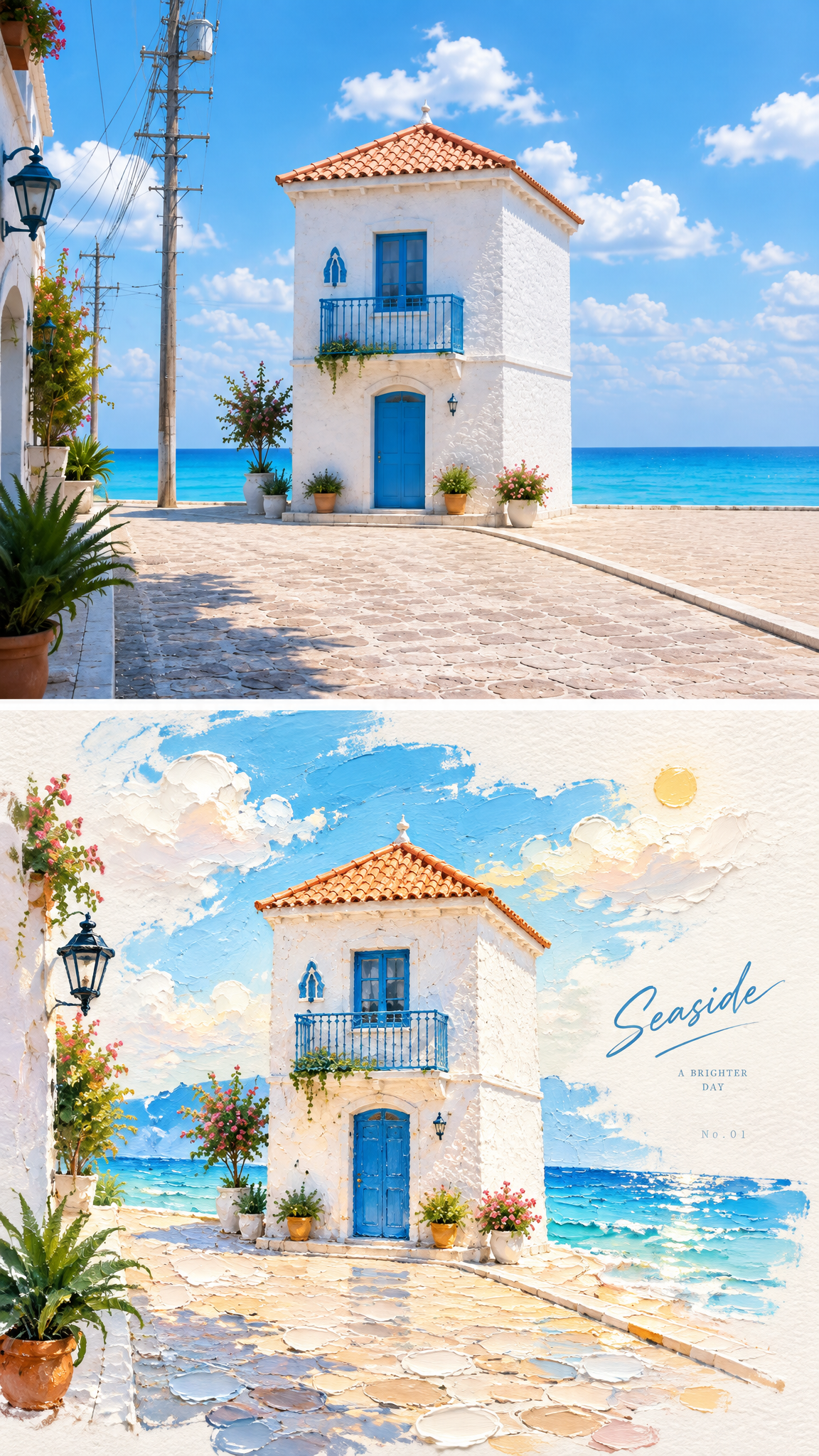
Create a strictly vertical 9:16 composite poster divided into two equal-height horizontal panels, wi查看创作过程

Create a strictly vertical 9:16 composite poster divided into two equal-height horizontal panels, with an exact 1:1 top-to-bottom ratio and a clean, clear separation. Use the uploaded image as the sole visual reference. TOP PANEL — ORIGINAL PHOTO: Reproduce the uploaded original photograph directly and faithfully. Preserve the main subjects' facial features, fur or hair colors, poses, movement, clothing, accessories, expressions, temperament, and realistic photographic texture. Keep the original natural lighting and atmosphere. Background architecture, streets, furniture, and surroundings remain secondary and may be gently softened. Do not stylize this upper panel. It must read clearly as the original photo before translation. BOTTOM PANEL — STYLE TRANSLATION: Recreate the same recognizable main subjects and their narrative relationship as a tactile 3D impasto oil-painting miniature landscape illustration poster. Preserve identity and key features while allowing moderate artistic adjustment of angle and proportions. The main subjects must remain dominant; buildings and environment must never become the protagonist. Use thick piled brushstrokes, layered vivid pigments, sculptural volume, palette-knife marks, undulating painted edges, bright textured paper, and a semi-hand-sculpted miniature physical-model feeling. Compose the lower panel with abundant warm-white negative space and a centered or slightly off-center diagonal axis. Place a translucent impasto color strip matching the original scene beneath or around the subjects, like water, ground, a path, a ribbon of light, or a landscape slice. Add subtle reflections, ripples, and luminous spots where appropriate. Include only sparse impasto clouds, a small sun, and soft mist in the background. Use a bright, refined palette inspired by the original but lifted in brightness and purity: crisp sky blue, lake cyan, tender green, warm yellow, coral orange, peach pink, golden yellow, and pure warm white. Avoid muddy colors, aged tones, muted Morandi colors, dark brown, neon glow, candy colors, plastic rendering, cartoon toy aesthetics, e-commerce styling, and template-like design. Concentrate impasto texture on water, clouds, color strips, and highlights. Add only minimal restrained typography in the lower panel: a very short title derived from the subject's mood or identity, plus tiny subtext or numbering, placed subtly along the diagonal axis or in open space. No watermark, logo, lengthy explanatory text, or unrelated subjects. The bottom panel must be instantly recognizable as a poetic stylized re-creation of the exact same image above.

如何使用这些 AI 图片提示词

先看主体和成品目标

读一条提示词时,先找出它要表现的主体,以及希望得到什么类型的图片。商品照、角色设定图和编辑式海报也许用同一类工具,但要解决的问题不同。保留与你的目标相符的部分,替换只属于原作者需求的细节。如果提示词描述了某个人、商品或宣传活动,请换成自己的主体与有权使用的参考素材。这样可以借鉴创作方法,而不必追求复制别人一模一样的画面。

找出决定画面的指令

接着看构图、光线、色彩、材质、镜头角度,以及画面中必须出现的文字。这些具体要求通常比一长串风格形容词更有用。同样的主体,放在中性背景和柔和侧光下,与放在繁忙场景和强闪光灯下,结果会很不一样。区分哪些要求不可缺少,哪些可以调整。写自己的版本时,先用清楚的语言表达必要条件,删去互相冲突的指令,再考虑是否需要增加细节。

核对参考图、模型和设置

有些案例从文字开始,有些则使用了上传的照片。如果提示词要求保留面容、服装、房间布局或商品外形,原作品就同时依赖参考图和文字。尝试类似方法时,请准备适合自己的图片。每张卡片下方的模型链接对应所选成品图的真实生成记录;打开案例还能看到对话如何继续。画面比例和分辨率会影响取景与细节,应按你的最终用途选择,不必机械照搬原案例的设置。

一次调整一个决定

完整复制一条提示词可以作为第一次尝试,但小幅修改更容易看出原因。可以只换主体而保留光线,或保留主体而更换场景。制作海报时,先替换标题和必须出现的文字,再调整装饰效果;制作人像时,先确定哪些特征需要在不同版本中保持一致。记下这一次改了什么,再与上一张结果比较。这样更容易发现真正改善画面的指令,而不是只把提示词越写越长。

让生成结果指导下一步

提示词是起点,不能保证得到完全相同的图片。生成后,检查是否缺字、商品细节是否变化、人物结构是否自然,以及构图是否适合用途。具体说出要修正的地方,同时说明哪些部分要保持不变。如果模型反复遗漏某项要求,就简化需求或分阶段处理:先把主要场景做好,再调整较小的细节。公开案例展示了一个事实:有用的作品往往来自连续、清楚的决定,而不是一句完美的咒语。

FAQ

这些 AI 图片提示词可以免费使用吗?

浏览公开案例和阅读提示词不收费。在 DREAMMMER 中创作新图片需要登录,并会按所选模型和设置使用积分。请使用自己有权使用的参考图,并确认其中的人物、商品或品牌素材可以用于你的项目。

每张图片是由哪个模型制作的?

每张图片下方的模型名称都能打开对应模型页。名称来自这张选定图片的成功生成记录,不是根据外观猜测。你可以尝试其他模型,但构图、文字表现以及对参考图的遵循程度可能会不同。

我可以复制提示词再修改吗?

可以。打开公开案例,先在上下文中读懂提示词,再把有用的部分放进自己的需求。把主体、必要文字、参考素材和画面格式换成自己的内容。如果想弄清哪条指令影响了结果,建议一次只改一个地方。

必须使用相同的参考图片吗?

不必。有些提示词确实依赖上传图片,但学习这个例子不需要拿到原始参考图。使用自己有权使用的照片,并说明哪些部分要保留、哪些要更改。即使文字相似,不同的参考图也可能带来非常不同的结果。